Caritas Church of Sacred Heart, Kampar

The Church of the Sacred Heart in Kampar is home to approximately 1,000 parishioners from the migrant community, the majority being Indonesian, alongside Bangladeshi and Nepali individuals.

Recognizing the profound struggles these communities face—particularly regarding legal documentation—the parish priest, prompted by the Holy Spirit, mobilized the church to take action. With the assistance of the embassy, the church has embarked on the difficult but vital journey of resolving these legal crises.
The story of Medical Camps

Intervention

Caritas Church of the Sacred Heart (Caritas CSH) addresses the needs of the marginalized through four key pillars:

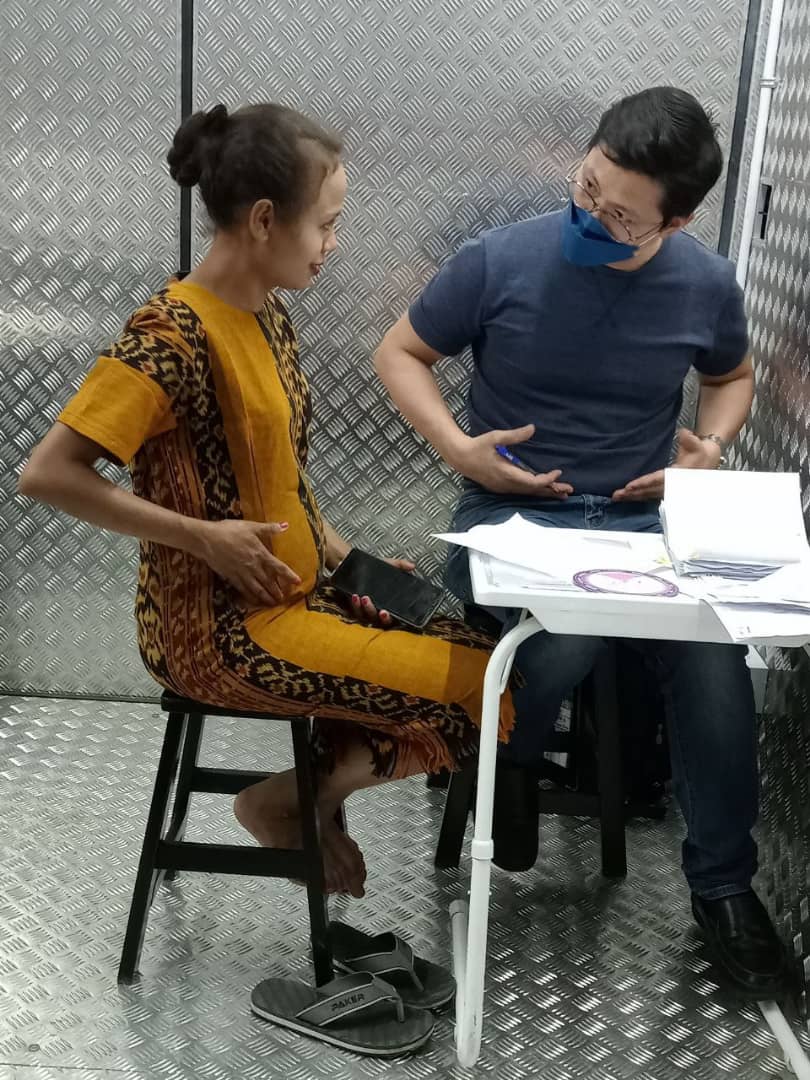
Every Sunday after Mass, Caritas CSH collaborates with local NGOs to provide a mobile clinic for mothers and babies. They also host periodic medical camps directly within the migrant villages.

Caritas CSH collaborates with employers to secure safe shelter, places of worship, and monthly food rations for those in need.

Caritas works closely with the Embassy and government authorities to help undocumented migrants replace and secure their legal documents.

Partnering with the Embassy and local communities, Caritas CSH provides dedicated tuition and educational support for Indonesian children born in Malaysia.

Prenatal check up

Voices from the ground

volunteering in medical camp
Melanie | Parish Caritas Representative

Melanie assists the parish priest in driving the social mission of Caritas CSH, working closely with Caritas representatives from other parishes to organize medical camps.

Why are medical missions so important for migrants and the poor?

“I joined this mission last year, though it was initiated in 2019. It is an incredibly meaningful way to serve. Most of the migrants dare not go to a public clinic when they are sick simply because of their documentation issues. Instead, we bring medical care to them.

“My partner Daniel and I have joined this medical mission three times so far. Beyond that, we distribute food rations to the poor every month and volunteer for major migrant events, such as World Day of Migrants and Refugees, and assist with immigration documentation.”

“The biggest challenge is limited resources. We have to work hard to find doctors, nurses, and pharmacists who are available to volunteer on the specific dates of the mission.”

“By planning early—at least one and a half months in advance.”

“First, proper planning, coordination, and follow-up are essential. Second, accurately identify a community in need that will truly benefit. Third, actively recruit your medical professionals and support staff. My main advice to all volunteers is this: do not see this mission as a tiring task. Work sincerely from the heart.”

“Pray for the safety and health of our volunteers traveling from Penang to the migrant kelompok (groups). Pray for the migrants receiving care, asking God for healing, comfort, and relief from their physical and emotional pain. Finally, ask for God’s blessing over our resources, that this mission remains sustainable and reaches even more communities.”

Dr. Ramona | Volunteer Doctor

Dr. Ramona is a humanitarian doctor ministering to refugees in Malaysia. Her ambition was clear from her first day of medical school: to serve those living on the margins who struggle to access healthcare. When CSH Kampar launched its medical mission, she was the first doctor to say "yes."

Germaine | Volunteer Nurse

Germaine is a full-time hospital nurse. When she was invited to join the medical mission, she recognized it as a direct calling from God. Inspired by Matthew 25:40—"Whatever you did for one of the least of these brothers and sisters of mine, you did for me"—she offered her nursing skills to serve the migrant community.

Medical camp at migrant settlement
Elizabeth Nana | Migrant volunteer

“We are very grateful for the medical mission from the Church, which helps us a lot. We cannot afford expensive medical bills, or even travel to the city to visit a clinic or hospital. Our pregnant women are unable to access clinics. Some have had to give birth in the villages without any medical assistance. We are thankful to God that medical aid has come to us instead, through your help.”

2026 © All Rights Reserved.